
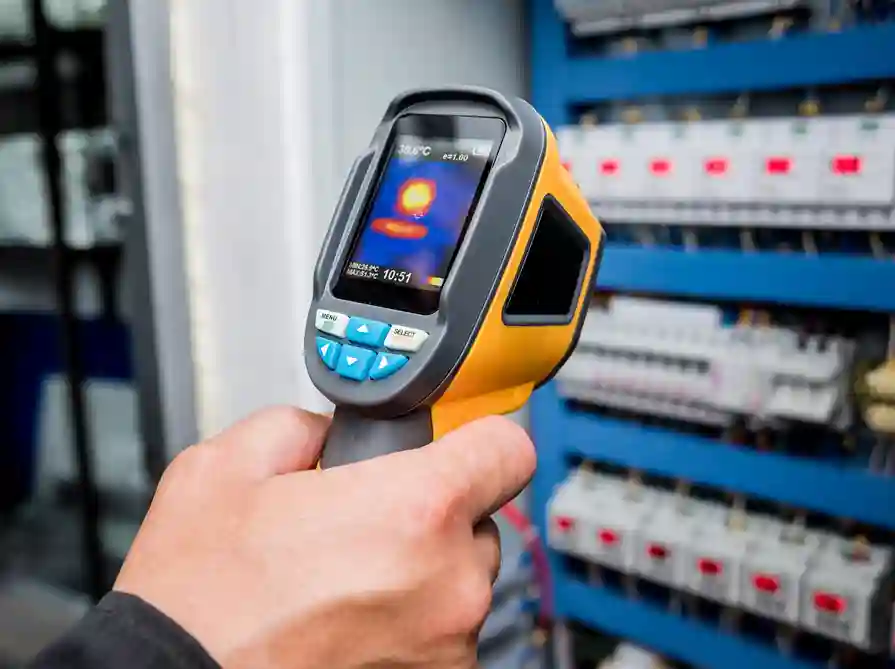
Water damage rarely announces itself. By the time a stain bleeds through your ceiling, moisture has usually been soaking the wood and drywall behind it for weeks. A thermal imaging home inspection catches that hidden moisture while it is still invisible — before it turns into mold, rot, or a five-figure repair.
Most people associate infrared cameras with electrical problems. In reality, we find moisture issues far more often. Because Alabama and Georgia homes deal with heavy humidity and hard spring storms, water finds a way in long before homeowners notice anything.
Key Takeaways
- A thermal imaging home inspection reveals temperature differences that expose hidden moisture, insulation gaps, and electrical hot spots — before any of them are visible.
- Moisture is the most common find. Because evaporating water cools wet materials, leaks show up on camera weeks before a stain ever appears.
- Electrical hot spots show up too; however, we find them far less often than moisture in the homes we inspect.
- Thermal cameras read surface temperatures only. They do not see through walls, so trained interpretation matters as much as the camera.
- The best times to scan: before you buy, after a major storm, or when energy bills climb without explanation.
What Is a Thermal Imaging Home Inspection?
During a thermal imaging home inspection, the inspector scans walls, ceilings, and floors with an infrared camera. The camera does not take normal photos. Instead, it measures the surface temperature of everything in view and converts those readings into a color map.
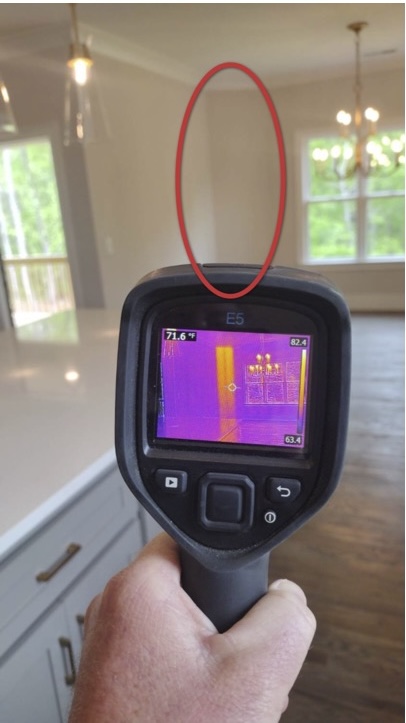
Warm areas show up red or white, while cooler areas appear blue or purple. As a result, anything that changes a surface’s temperature — water, escaping air, an overheating wire — stands out instantly. For a deeper look at the technology itself, read our guide on what a thermography inspection is.
Moisture: What a Thermal Imaging Home Inspection Finds Most
Here is the key science. Evaporating water cools the material around it. Consequently, a damp patch of drywall reads several degrees cooler than the dry wall beside it. On camera, that wet spot appears as a dark, cool bloom — even though your eye sees a perfectly normal wall.
Timing matters here, because mold can begin growing on damp materials within 24 to 48 hours, according to the EPA’s guide to mold and moisture. Finding the water early is the difference between drying a wall and gutting it.
Where Hidden Moisture Usually Hides
In our inspections, moisture most often turns up around roof flashing and chimneys, under window and door openings, along plumbing lines inside walls, and beneath bathrooms. In addition, air-conditioning condensate lines love to drip quietly inside ceilings all summer.
Local weather makes this worse. Birmingham and Huntsville spring storms drive rain sideways into siding and flashing. Meanwhile, Atlanta’s humidity keeps crawl spaces damp for months at a time. A thermal scan turns all of that invisible water into something we can see, document, and trace to its source.
Electrical Hot Spots: Less Common, Still Critical
Thermal cameras also catch electrical problems, and these findings matter even though they are rarer. A loose connection or overloaded circuit generates heat long before it fails. On camera, that heat glows inside a panel or wall like a beacon.
The stakes are high. According to the U.S. Fire Administration, electrical malfunction caused nearly 23,700 home fires in 2023. Therefore, when a scan does reveal a hot spot, we flag it as a priority repair — usually a quick fix for an electrician once they know exactly where to look.
Insulation Gaps and Air Leaks
Thermal imaging also exposes missing or slumped insulation, which appears as cold streaks across walls and ceilings in winter or warm streaks in summer. Similarly, air leaks around doors, windows, and can lights show up as sharp temperature lines. Fixing these is one of the cheapest ways to lower a power bill, and the camera tells you exactly where to start.
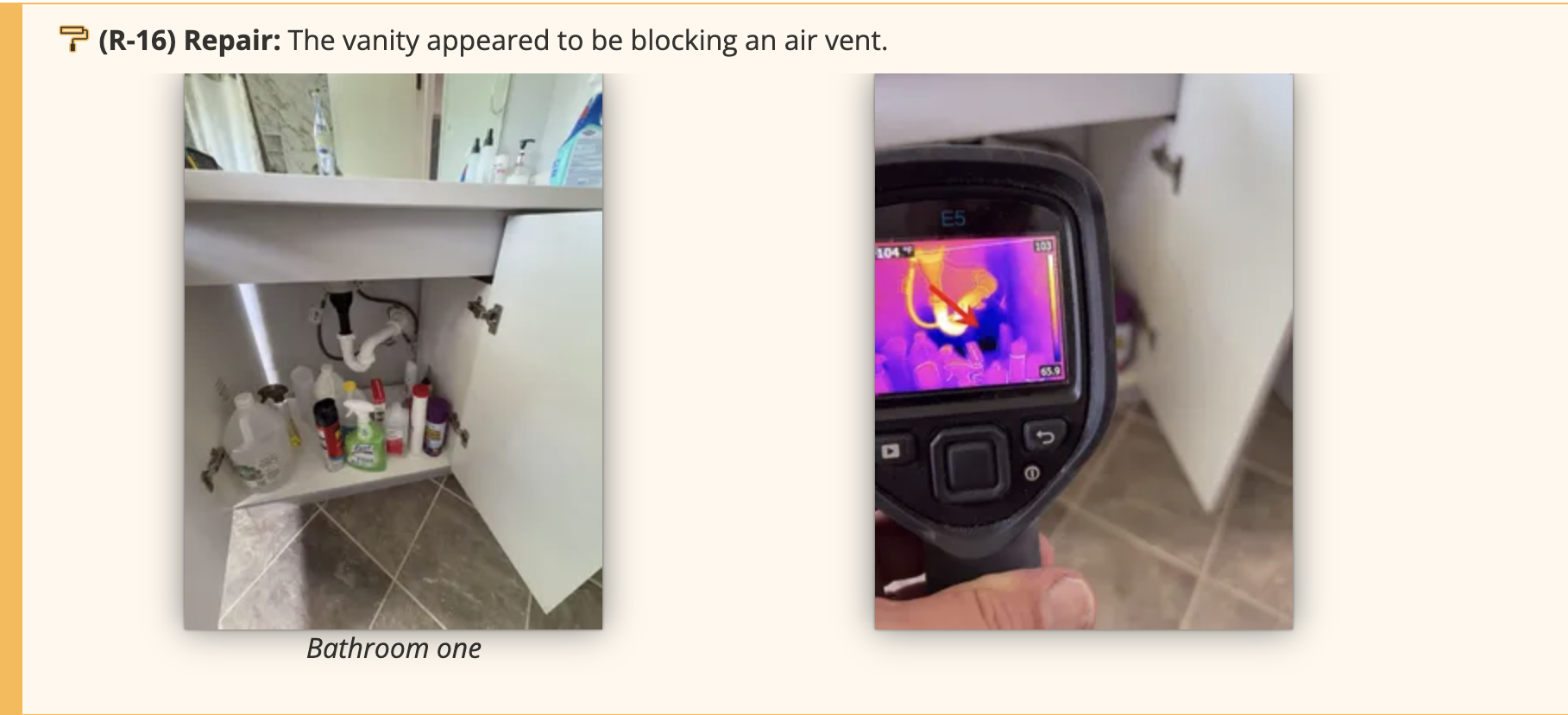
The camera catches airflow problems, too. For example, on a recent inspection our inspector noticed odd temperatures around a bathroom cabinet. The thermal view told the story instantly: the vanity had been installed directly over an HVAC vent, blocking conditioned air from ever reaching the room.
What a Thermal Camera Cannot Do
To be clear, an infrared camera is not an X-ray machine. It reads surface temperatures only — it cannot see through walls, and it needs a meaningful temperature difference to reveal a problem. For example, a slow leak that has fully dried out may not show at all.
That is why the inspector matters as much as the camera. A trained thermographer knows how to create the right conditions, how to rule out false alarms like cold air ducts, and when to confirm a suspect area with a moisture meter before calling it a defect.
When to Schedule a Thermal Imaging Home Inspection
A thermal imaging home inspection earns its keep in a few specific situations. First, before you buy — it adds a layer of certainty a visual inspection alone cannot match. Second, after a major storm or a suspected leak, when you want to know how far water actually traveled. Third, when energy or water bills climb with no obvious explanation.
Above all, it is a tool for catching problems while they are still small. A scan that finds a damp window sill today can save you from replacing a rotted wall next year.
Frequently Asked Questions About Thermal Imaging Home Inspections
Can thermal imaging see through walls?
No. The camera reads surface temperatures only. However, problems inside a wall — moisture, missing insulation, an overheating wire — change the temperature of the surface, and that is what the camera detects.
Can a thermal camera detect mold?
Not directly. Instead, it finds the moisture conditions where mold grows. Because mold can start within 24 to 48 hours of water exposure, finding dampness early is the best prevention there is.
Can thermal imaging find plumbing leaks under floors?
Often, yes. A leaking supply or drain line changes the floor’s surface temperature above it. As a result, we can frequently trace a leak to a specific area before anyone cuts into the slab or subfloor.
Does thermal imaging work year-round in the South?
Yes. The camera needs a temperature difference to work, and our summers and winters both provide one. In mild shoulder seasons, an experienced inspector can run the HVAC to create the contrast the scan needs.
Can it really find electrical problems?
Yes. Loose connections and overloaded circuits give off heat before they fail, and that heat is visible on camera. In our experience these finds are less common than moisture, but they are some of the most important.
Is a thermal imaging home inspection worth it on new construction?
Definitely. New homes hide their own problems — insulation voids, flashing mistakes, plumbing fittings that seep. In fact, catching these during a builder warranty period means the builder pays for the fix, not you.
How do I add thermal imaging to my inspection?
Just ask for it when you book. Ally offers thermography across Birmingham, Huntsville, and metro Atlanta, and you can schedule online in a few minutes.
Find Problems While They Are Still Small
You cannot fix what you cannot see. A thermal imaging home inspection gives you a clear picture of the moisture, insulation, and electrical issues hiding behind finished surfaces — and the documentation to negotiate repairs or plan them on your terms.
Ally Property Inspections serves Birmingham, Huntsville, and metro Atlanta with certified inspectors and same-day digital reports. Schedule your inspection today and see your home the way our cameras do.