
Pool & Spa Inspections
Pool and spa inspection: know the pool before you own the home.
Most home inspections stop at the back door. A dedicated pool and spa inspection evaluates the pool’s structure, equipment, and safety — so the backyard feature you’re paying for doesn’t become the surprise you inherit after closing.
Why it matters
A pool is a system — not just a backyard feature.
Pools and spas live outside in full exposure to sun, rain, debris, and changing temperatures. That wear compounds over a 10–20 year service life. Even a pool that looks clean and inviting can hide problems in the shell, equipment, plumbing, and safety features.
Not in a standard inspection
Most home inspectors in Alabama and Georgia don’t evaluate pools or spas. Without a dedicated inspection, the pool goes under contract sight-unseen.
Built for our climate
Long summers, intense UV, humidity, and storm debris wear pools hard across Birmingham, Huntsville, and the Atlanta metro — and accelerate deck, surface, and equipment failure.
Findings you can act on
A written report gives you real leverage — to renegotiate, request repairs, or walk away with confidence. The inspection cost is small next to what it uncovers.
What’s covered
What a pool and spa inspection covers.
We document the visible condition and operation of accessible components at the time of the inspection — the structure, the equipment, and the safety systems that keep everyone around the pool safe.
Side by side
Pool inspection vs. a standard home inspection.
Buyers often assume the pool is covered by their general home inspection. Usually, it isn’t.
What we find
The problems that show up again and again.
Across Birmingham, Huntsville, Mountain Brook, Buckhead, Marietta, and the surrounding markets, the same defects turn up on pools exposed to long summers, heavy use, and uneven maintenance.
Surface cracking & finish wear
Cracks, rough finishes, peeling coatings, and staining point to age, deferred maintenance, or significant repair needs.
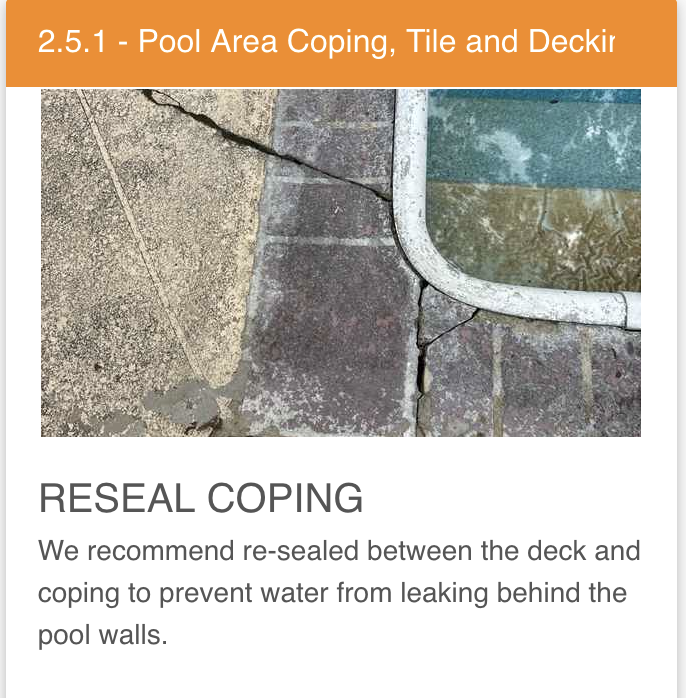
Coping, tile & decking damage
Loose coping, broken tile, cracked decking, trip hazards, and settlement around the pool affect appearance, safety, and cost at once.
Equipment problems
Pumps, filters, heaters, controls, and salt cells show wear, leakage, corrosion, or poor maintenance well before they fail.
Drainage & water management
Poor drainage contributes to surface wear, deck failure, erosion, and standing water — accelerated by Gulf Coast humidity and heavy summer rain.
Leakage & water loss
Wet areas, water-loss patterns, equipment leaks, and settlement clues often signal a leak. Any sign warrants follow-up.
Safety concerns
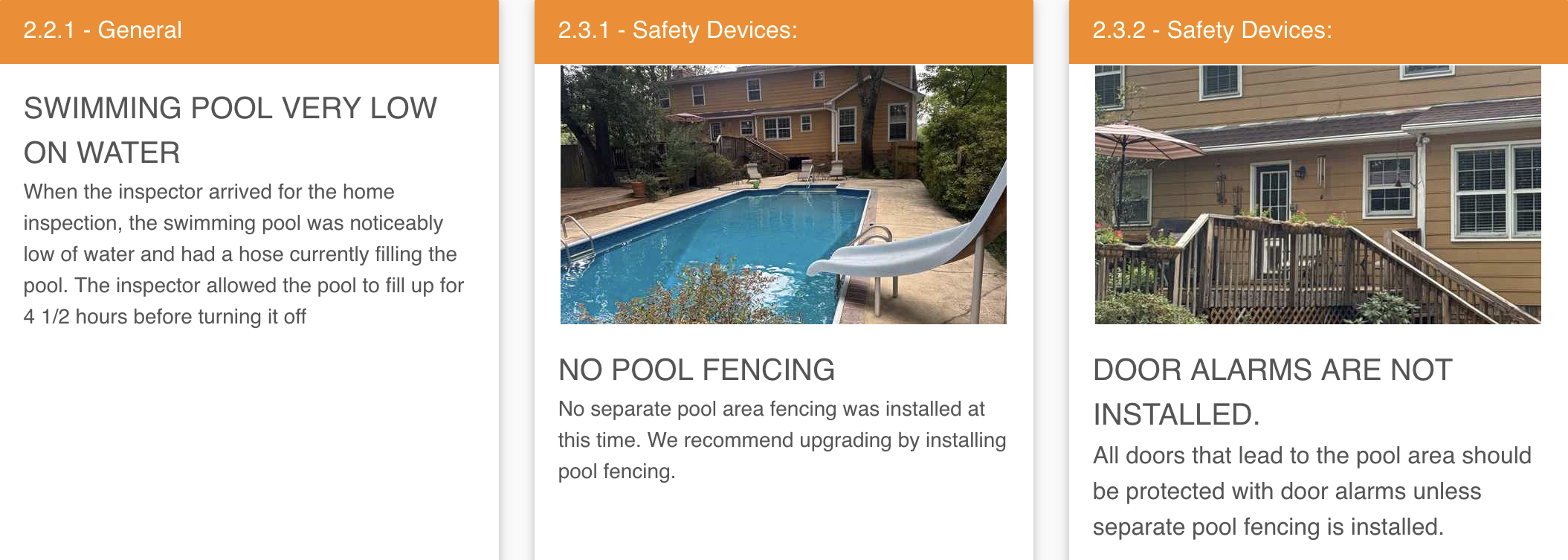
Missing or weak barriers, unsafe decking, and non-compliant drains all warrant attention — older pools frequently fail anti-entrapment requirements.
Pricing
Clear pricing, no surprises.
A typical pool and spa inspection with Ally. The inspection cost is small next to what it commonly uncovers — a single repair can run thousands.
What affects your price
- Pool type — gunite / concrete, vinyl liner, or fiberglass
- Size & configuration — single basin vs. pool plus attached spa
- Equipment count — pumps, heaters, filters, automation, salt systems
- Spa or water feature — whether one is included in the scope
Always get it in writing.
A verbal opinion can’t be used in a negotiation. A written report gives you leverage at the table, documentation for insurance and future maintenance, and a defensible record if undisclosed defects surface after closing.
A sparkling blue pool isn’t the same thing as a well-maintained one — and appearance can hide plenty. We put what we find on paper, in plain language, so you know what matters, what can wait, and what to watch.
Good to know
Pool and spa inspection FAQ.
How much does a pool inspection cost in Alabama or Georgia?
Are pools and spas included in a standard home inspection?
What does a pool inspection cover?
How long does a pool inspection take?
Is a clean-looking pool usually a good sign?
Should I get a written report or just a verbal opinion?
When should a buyer take a pool more seriously?
Buying a home with a pool? Let’s make inspection day the easy part.
We serve buyers across Birmingham, Huntsville, and the greater Atlanta area. Give your pool the evaluation it deserves — before closing, not after.
Want the full breakdown?
Read our complete pool inspection buyer’s guide — costs, common defects, and what a written report should tell you.