
By Meredith Jones, Owner, Ally Property Inspections · Published May 10, 2026
Key Takeaways
- A pool and spa inspection is a specialized evaluation of a residential pool’s structure, equipment, and safety components, typically ordered before a home purchase.
- Most home inspectors in Alabama and Georgia do not include pools or spas in a standard home inspection.
- Pool inspections at Ally Property Inspections range from $250 to $400, depending on pool size, equipment, and spa inclusion.
- The most common defects found are surface cracks, equipment corrosion, leak indicators, decking damage, and missing or non-compliant safety barriers.
- Always insist on a written report — verbal opinions are not usable in negotiations.
A pool inspection Alabama homebuyers can rely on — also called a pool and spa inspection — is a specialized evaluation of a residential pool’s structural, mechanical, and safety components, performed before closing on a home. Because pools in Alabama and Georgia face long summers, intense UV, humidity, and storm debris, a thorough pool inspection in Alabama regularly uncovers thousands of dollars in deferred maintenance that a standard home inspection will not catch.
A pool can make a property more appealing — but it also adds cost, maintenance, and risk that buyers underestimate. For example, surface cracks, failing equipment, leaks, damaged decking, poor drainage, or neglected safety features can turn a feature that looks fun in listing photos into an expensive problem after closing.
At Ally Property Inspections, we serve buyers across Birmingham, Huntsville, and the greater Atlanta area. A pool is not just a backyard feature. Instead, it is a system with structural components, mechanical equipment, and safety issues that deserve careful evaluation.
Why Pool and Spa Inspections Matter
Pools and spas live outside in full exposure to sun, rain, debris, use, and changing temperatures. That exposure compounds over a 10–20 year service life and is the single largest driver of pool defects we find at resale.
However, even when a pool looks clean and inviting, defects are often present in the shell, coping, tile, decking, pumps, filters, plumbing, electrical components, heaters, drains, and safety features. In fact, some problems affect function, some affect safety, and many affect both.
Most home inspection companies in Alabama and Georgia do not include pools or spas in their standard scope, which is why a separate pool inspection Alabama buyers can trust matters before closing. Therefore, buyers are best protected when a specialist evaluates both the structural and mechanical aspects of the pool — a recommendation echoed by industry standards from InterNACHI and ASHI.
How Much Does a Pool Inspection Cost in Alabama or Georgia?
A pool inspection Alabama and Georgia buyers schedule with Ally Property Inspections typically costs $250 to $400. Pricing depends on:
- Pool type — gunite/concrete, vinyl liner, or fiberglass
- Pool size and configuration — single basin vs. pool plus attached spa
- Equipment count — pumps, heaters (gas or heat pump), filters, automation, salt systems
- Whether a spa or water feature is included
Additionally, if leak detection is needed, that is performed by a specialist (typically $500–$850) and is not included in a standard pool inspection. For example, pool repairs found during inspection commonly run: $800–$2,500 for a replacement pump or filter, $3,000–$8,000 for resurfacing a gunite pool, and $2,500–$6,000 for liner replacement. In other words, the inspection cost is small compared to what it commonly uncovers.
Pool Inspection vs. Standard Home Inspection
Buyers often assume a pool is covered by their general home inspection. However, it usually is not.
| Component | Standard Home Inspection | Dedicated Pool & Spa Inspection |
|---|---|---|
| Pool shell / structure | Not evaluated | Evaluated |
| Pumps, filters, heaters | Not operated | Operated and tested |
| Coping, tile, decking | Visual only, if at all | Detailed visual & condition assessment |
| Leak indicators | Not checked | Checked (full leak detection optional) |
| Safety barriers, drains, anti-entrapment | Not assessed | Assessed against CPSC and VGB Act guidelines |
| Spa / water features | Excluded | Operated and reported |
| Written report | N/A for pool | Yes — usable in negotiations |
What a Pool or Spa Inspection Reveals
A pool or spa inspection documents the visible condition and operation of accessible components at the time of the inspection. For example, it typically covers:
- The visible condition of the pool or spa shell (gunite, vinyl liner, or fiberglass)
- Decking, coping, and surrounding hardscape
- Tile and surface finish (plaster, pebble, quartz)
- Pumps, filters (sand, cartridge, DE), and automation panels
- Heater operation — gas, electric resistance, or heat pump
- Skimmers, main drains, and return jets
- Plumbing and visible electrical components
- Leak indicators and water-loss patterns
- Drainage around the pool area
- Safety barriers, gates, alarms, and anti-entrapment drain covers
- Deferred maintenance and equipment age
Common Pool and Spa Problems Found During Inspections
Indeed, across Alabama and Georgia, these defects show up again and again.
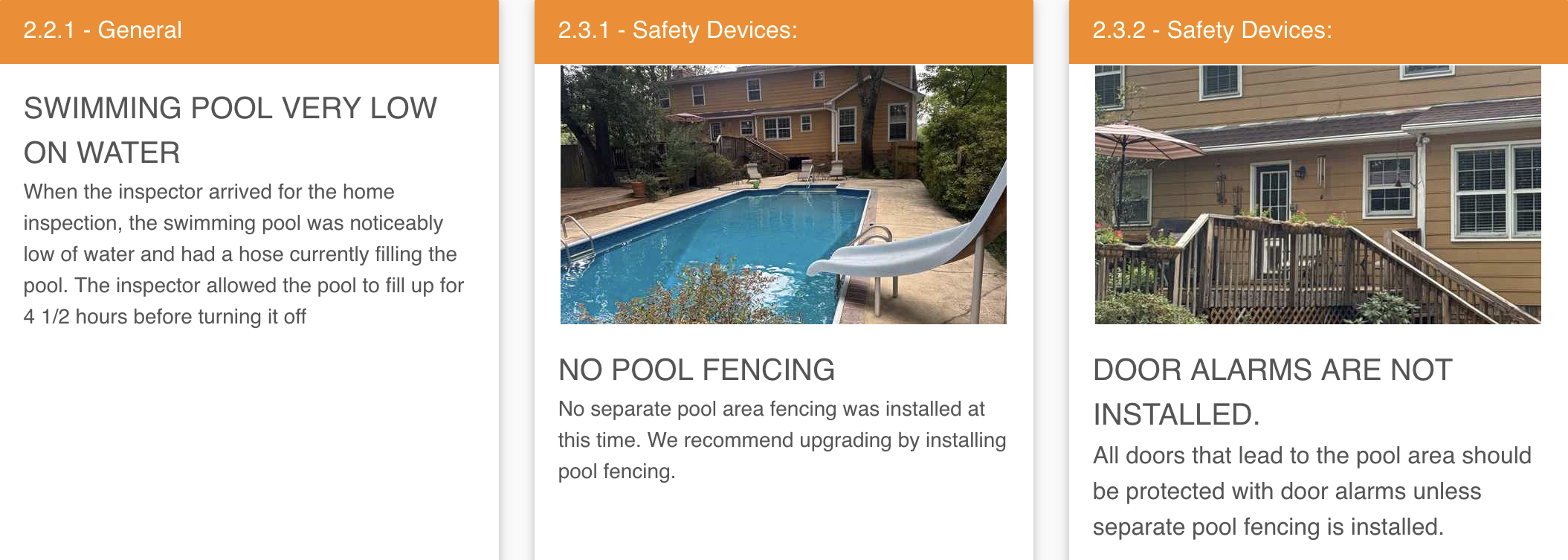
Surface Cracking and Finish Deterioration
Of course, pool surfaces wear down over time. Cracks, rough finishes, peeling coatings, staining, and visible deterioration point to age, deferred maintenance, or significant repair needs. A typical gunite pool needs resurfacing every 10 to 15 years.
Coping, Tile, and Decking Damage
Likewise, loose coping, broken tile, cracked decking, trip hazards, and settlement around the pool area are common. As a result, these affect appearance, safety, and repair cost simultaneously.
Equipment Problems
Similarly, pumps, filters, heaters, controls, and salt cells show wear, leakage, corrosion, age, or poor maintenance. Pool pumps typically last 8–12 years; gas heaters 5–10 years; cartridge filters 10+ years. Therefore, equipment past these thresholds is repair-imminent.
Drainage and Water Management
Meanwhile, poor drainage around a pool contributes to surface wear, deck failure, erosion, and standing water. In addition, Gulf Coast humidity and Atlanta’s heavy summer rain accelerate these issues.
Leakage and Water Loss
Wet areas, water-loss patterns, equipment leaks, staining, and settlement-related clues often indicate a leak. Because pool leaks can be expensive to diagnose and repair, any sign warrants follow-up.
Safety Concerns
Above all, damaged surfaces, missing or weak barriers, unsafe decking, and non-compliant drains all warrant attention. The Virginia Graeme Baker Pool & Spa Safety Act mandates anti-entrapment drain covers; older pools frequently fail this requirement.
Pool and Spa Issues We Commonly See in Alabama and Georgia
During a pool inspection Alabama and Georgia homebuyers commission, our inspectors regularly find similar issues across Birmingham, Huntsville, Mountain Brook, Vestavia Hills, Buckhead, Marietta, and surrounding markets — properties exposed to long summers, heavy use, storm debris, and uneven maintenance. Common findings include:
- Cracked or deteriorated pool surfaces
- Broken tile or loose coping
- Damaged or uneven decking
- Worn or leaking equipment
- Visible corrosion at pumps and heaters
- Poor drainage around the pool area
- Deferred maintenance
- Visible safety concerns
- Spas or water features that are not functioning
- Conditions that warrant pool-specialist follow-up
Of course, not every pool has major problems. But a buyer should never treat a pool as just another cosmetic feature.
Why Pool Problems Are Common in Alabama and Georgia Homes
Every pool inspection Alabama and Georgia homes receive reflects the same regional pressure: long hot seasons, sustained UV exposure, high humidity, heavy rain, organic debris, and continual mechanical wear in Birmingham, Huntsville, and the Atlanta metro. Some pools are well maintained. However, others are cleaned just enough to photograph well for listing day.
A sparkling blue pool is not the same thing as a well-maintained pool. In other words, appearance can hide plenty.
When to Pay Extra Attention to a Pool or Spa
A pool or spa deserves closer inspection when:
- The seller has no documented maintenance records
- The pool looks attractive but the equipment pad looks neglected
- There are visible cracks, movement, or damaged decking
- Water level, water clarity, or equipment performance seems off
- The spa, heater, or automation is not operating as expected
- You plan to use the pool soon after moving in
- The pool is more than 10 years old without a documented resurface
Simple Pool Problems Homebuyers Should Not Ignore
Therefore, during a showing or walkthrough, do not ignore:
- Cracks in the pool surface
- Loose or broken tile
- Damaged coping
- Cracked or uneven decking
- Rust or leakage at equipment
- Unusually low water level
- Patchwork repairs
- Neglected equipment pads
- Non-working spa features
- Missing or questionable safety barriers and drain covers
Why a Written Pool Report Matters
Most importantly, a buyer should never settle for a verbal opinion on a pool. A written report gives the buyer leverage in negotiations, documentation for insurance and future maintenance, and a defensible record if undisclosed defects surface after closing.
Need a Pool or Home Inspection in Alabama or Georgia?
If you are buying a home in Birmingham, Huntsville, or the Atlanta area and the property has a pool or spa, schedule a dedicated pool inspection Alabama and Georgia buyers can rely on — do not assume it is covered the same way as the rest of the home. In short, a pool or spa deserves its own evaluation.
At Ally Property Inspections, we help buyers fully understand the homes they are purchasing, including the add-on inspections worth serious consideration before closing.
Frequently Asked Questions About Pool and Spa Inspections
How much does a pool inspection cost in Alabama or Georgia?
At Ally Property Inspections, pool and spa inspections typically cost $250 to $400, depending on pool size, equipment, and whether a spa is included. Meanwhile, leak detection, if needed, is handled by a specialist and typically runs $500 to $850.
Are pools and spas included in a standard home inspection?
No. In fact, most home inspection companies in Alabama and Georgia do not include pools or spas in the scope of a standard home inspection. Therefore, a specialist inspection is required to evaluate the pool’s structure, equipment, and safety features.
Why should a homebuyer get a pool inspection?
Because a pool has its own structural, mechanical, and safety concerns. As a result, buyers can inherit thousands of dollars in repairs — pumps, heaters, resurfacing, leak detection, and decking — if those issues are missed before closing.
What does a pool inspection cover?
A pool inspection covers the pool shell, coping, tile, decking, pumps, filters, heaters, plumbing, visible electrical, safety barriers, drains, and spa or water features. Additionally, both structural and mechanical aspects are evaluated.
How long does a pool inspection take?
In general, pool and spa inspections take 60 to 90 minutes on site, plus additional time for the written report.
Is a clean-looking pool usually a good sign?
Not necessarily. For example, a pool can look clean and still have failing equipment, active leaks, damaged surfaces, or deferred maintenance. In short, visual cleanliness is not a substitute for inspection.
Should I get a written report or just a verbal opinion?
Always get a written report. Moreover, written reports protect the buyer, support repair negotiations, and provide a record if defects surface after closing.
Can pool repairs be expensive?
Yes. For example, common ranges: $800–$2,500 for a replacement pump or filter, $3,000–$8,000 for resurfacing a gunite pool, $2,500–$6,000 for vinyl liner replacement, and $500–$850 for specialist leak detection.
When should a buyer take a pool more seriously?
Any time the property has a pool or spa — but especially when the equipment area looks neglected, the seller lacks maintenance records, or there are visible cracks, leaks, or damaged surrounding surfaces.