

By Meredith Jones, Owner, Ally Property Inspections · Published June 10, 2026
Key Takeaways
- A mold inspection when buying a house uses air-quality testing, because the most dangerous mold is the mold you can’t see.
- Standard home inspections are visual — hidden mold behind walls and inside ductwork falls outside their scope.
- Humid Alabama and Georgia summers make buyer mold testing more important here than in dry climates.
- Results come back fast: samples are overnighted to a lab, with results in 24 to 48 hours — well within a due diligence period.
Should you add a mold inspection when buying a house? In Alabama and Georgia, our answer is usually yes — and the reason is simple. All homes have mold, and it isn’t necessarily visible. The humid Southeast gives mold everything it needs: warmth, moisture, and plenty of hidden places to grow. A buyer gets exactly one chance to test before the house becomes their problem. This guide explains what mold testing involves, what it catches that a standard inspection can’t, and what to do with the results.
Why Humid-Climate Homes Hide More Mold
Mold needs moisture, and our region supplies it generously. Summer humidity regularly climbs past 90%, and air conditioning systems run for months while pulling gallons of condensation out of the air every day. When everything works, that moisture drains away harmlessly. However, when a condensate pan clogs or ductwork sweats, mold gets a quiet, dark home inside the HVAC system — and the blower then distributes spores through the entire house.
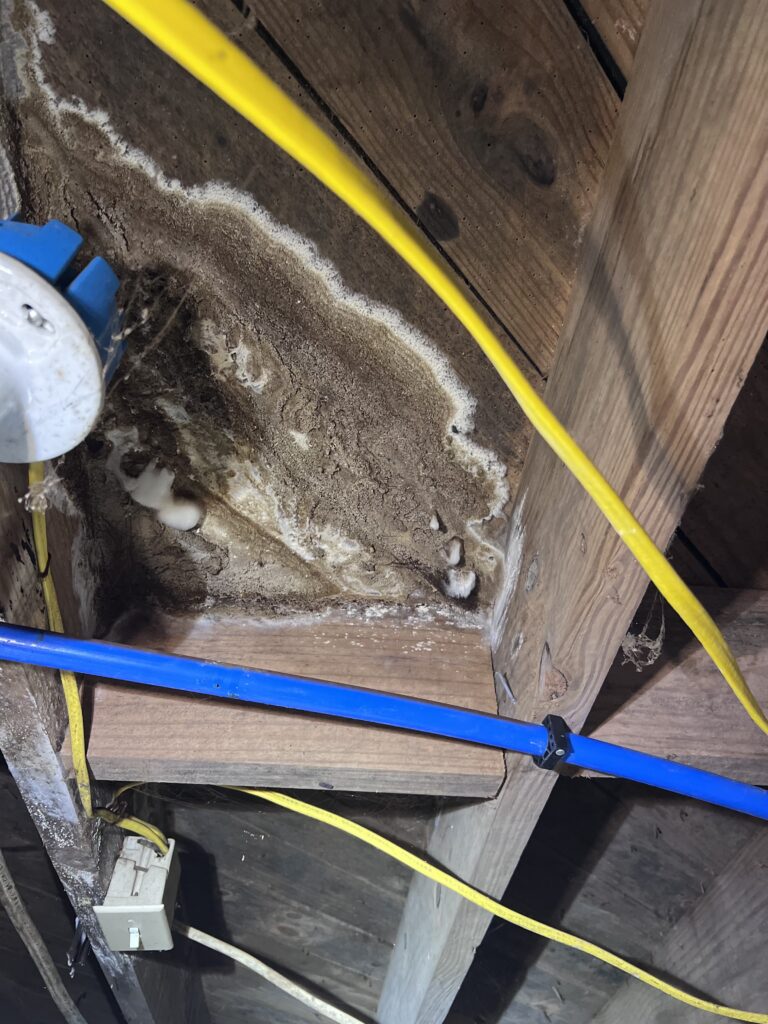
Crawl spaces are the other hotspot. Most Birmingham and Atlanta homes sit over vented crawl spaces where humid outdoor air meets cool surfaces and condenses. As a result, the wood framing above can stay damp for months at a time without anyone noticing.
What a Standard Inspection Catches — and Misses
A home inspection is visual and non-invasive. Our inspectors will absolutely flag visible mold, water stains, musty odors, and the moisture conditions that feed growth. Nevertheless, the worst mold problems are usually invisible. The most common causes of unseen mold are a roof leaking between framing and drywall, a small plumbing leak over a long period, window leaks, and condensate problems inside HVAC ductwork.
None of those show up in a visual exam until damage surfaces. That’s why mold sits on the list of things a general home inspection doesn’t cover — and why testing exists.
How a Mold Inspection When Buying a House Actually Works
The test is an air-quality sampling, completed during your regular inspection appointment. Our base mold testing covers 1,000 square feet inside the home, plus a control sample collected outside. The outdoor control matters, because all air contains spores; the question is whether indoor concentrations and strains differ from the baseline. For larger homes, additional samples cover more areas.
Afterward, the samples are overnighted to a lab, and results are ready within 24 to 48 hours of arrival. In other words, the timeline fits comfortably inside a typical due diligence period. The report identifies the strains present and their concentrations — read more about interpreting results in our guide to testing indoor air quality for mold, or visit the EPA’s mold resource page. In addition, you can view a sample mold report (PDF) to see exactly what you’ll receive.
The Vacant House Trap
Here’s a scenario we see constantly: a seller turns off the AC in an empty house to “save money.” With no air conditioning running, summer humidity climbs unchecked inside. Mold and mildew bloom on walls, furniture, and inside ductwork. If the house had stayed empty long enough, it’s completely possible no one would have noticed the growth until after closing. Therefore, treat any vacant listing in summer as a strong candidate for a mold inspection when buying — especially if the utilities were off at any point.
What to Do If Testing Finds a Problem
A bad result isn’t automatically a dealbreaker. Instead, it’s negotiating information. You can ask the seller to remediate professionally and re-test before closing. Alternatively, you can negotiate the price to cover remediation, or walk away if the source (like a long-term roof leak) suggests deeper damage. Most importantly, identify and fix the moisture source — remediation without fixing the leak just schedules the next outbreak. We covered the short version of this case in our earlier post on getting a mold inspection before buying your dream home; consider this guide the complete picture.
Frequently Asked Questions About Mold Inspections When Buying a House
Is a mold inspection included in a home inspection?
No. The standard inspection is visual, so it catches visible mold and moisture conditions. However, air-quality testing for hidden mold is a separate add-on service.
Do I really need mold testing when buying a house?
In humid Alabama and Georgia, we recommend it for most purchases. Above all, test vacant homes, homes with crawl spaces, and any home with a musty smell or past water damage.
How long do mold test results take?
Samples are overnighted to the lab, and results arrive within 24 to 48 hours after they’re received. Consequently, the timeline fits inside a normal due diligence period.
What does the air sample test measure?
It identifies the mold strains present and their concentrations, compared against an outdoor control sample. Elevated indoor levels or concerning strains signal a hidden problem.
Should I walk away from a house with mold?
Not necessarily. Mold is fixable when the moisture source is fixable. Instead of walking immediately, get remediation quotes, negotiate, and require a re-test before closing.
Why is mold worse in vacant houses?
Sellers often turn off the AC to save money. Without air conditioning controlling humidity, moisture builds for weeks, and mold grows unseen on walls and inside ductwork.
Test Before You Buy, Not After You Move In
A mold inspection when buying a house costs a fraction of post-closing remediation, and it’s the only chance to make mold the seller’s problem instead of yours. Contact Ally Property Inspections to add mold air-quality testing to your inspection anywhere in metro Atlanta, Birmingham, or Huntsville.